
Invoice in the Netherlands (2026 Guide for Freelancers & Small Businesses)
Learn how invoicing works in the Netherlands in 2026. A practical guide for freelancers covering VAT rules, invoice requirements, payment timing, and compliance essentials to stay accurate and get paid faster.

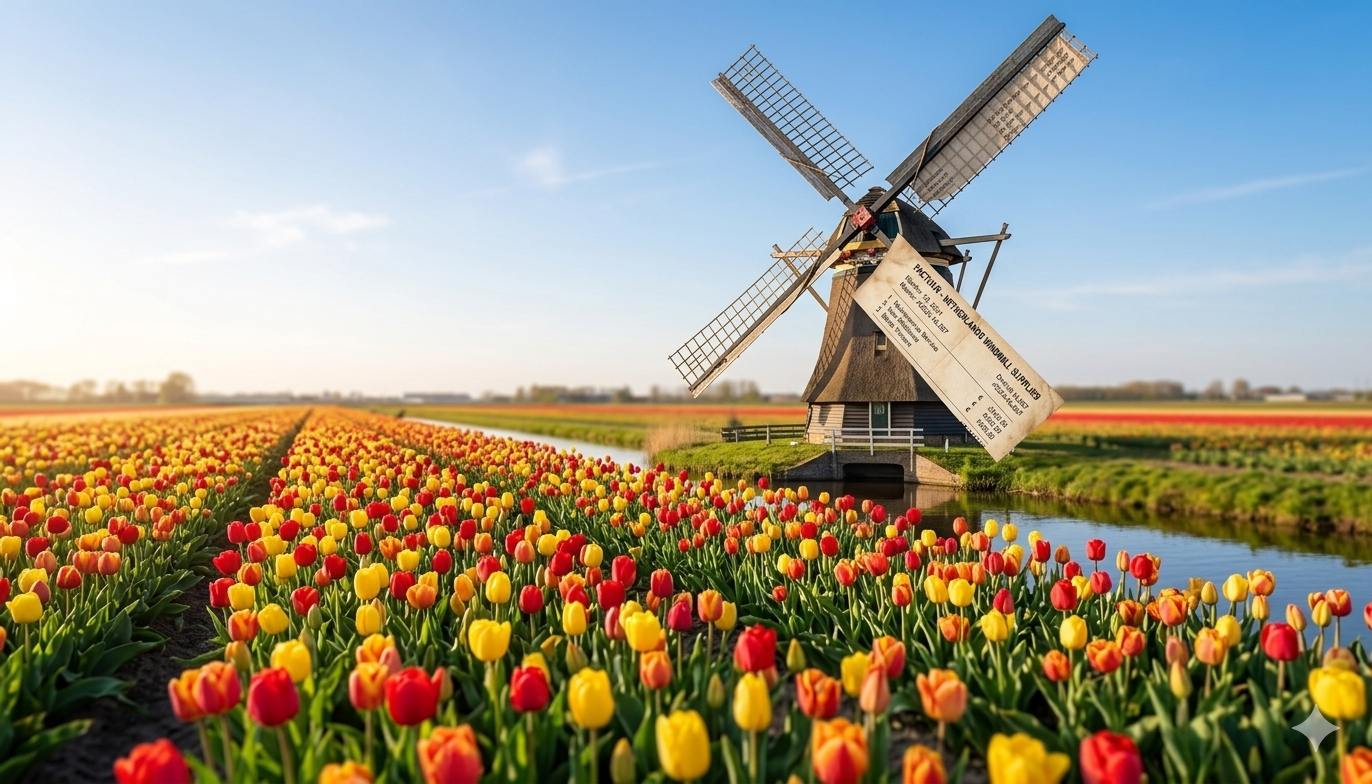
Invoicing in the Netherlands is closely tied to VAT compliance, reporting obligations, and payment timing rules. For freelancers, consultants, and small businesses, even small invoicing mistakes can lead to delayed payments or issues with VAT recovery for your clients.
The good news is that the system is highly structured and predictable once you understand the core rules. This guide explains how invoicing works in the Netherlands in 2026, what must appear on your invoice, when VAT applies, and how to stay compliant without turning invoicing into a full-time administrative task.
Who must issue invoices in the Netherlands?
In most cases, you must issue an invoice if you sell goods or services as a business.
This applies when you sell to:
- Other businesses or entrepreneurs
- Legal entities such as foundations or associations
- Private individuals in specific regulated cases (for example, intra-EU vehicle sales)
Example
A freelance UX designer working with a Dutch startup must issue an invoice for every project milestone.
A consultant working with a German company must also issue an invoice, including the client’s EU VAT number.
Invoices are not just “good practice” — they are a legal requirement for most B2B transactions.
How invoicing works in the Netherlands
The Dutch invoicing system is built around VAT reporting and traceability.
To operate as a freelancer, you typically need:
- A KVK (Chamber of Commerce) registration number
- A VAT identification number (BTW-nummer) if VAT registered
- A structured invoicing system that ensures sequential invoice numbering
Most freelancers use accounting software to generate invoices automatically, but it is also allowed to issue invoices manually as long as all legal requirements are met.
Example
A freelance developer registers at the KVK, receives a VAT number, and starts issuing invoices through accounting software after each completed sprint.
What must be included on a Dutch invoice?
A Dutch invoice is a legal VAT document. If key information is missing, your client may not be able to reclaim VAT, and payment may be delayed.
Every invoice must include:
1. Your business details
- Full legal name
- Business address
- KVK number (if applicable)
- VAT number (if registered)
Example
“Anna de Vries Freelance Design Studio, Amsterdam, KVK 12345678, VAT NL123456789B01”
2. Customer details
- Client name
- Client address
- EU VAT number (if applicable)
Example
A German agency client must include their DE VAT number for reverse-charge invoicing.
3. Invoice identifiers
- Unique invoice number (sequential, no gaps)
- Invoice date
Example
2026-001, 2026-002, 2026-003 (never reused or skipped)
4. Description of services
- Clear description of work delivered
- Quantity or hours worked
Example
“UX design for mobile onboarding flow – 20 hours”
5. Amounts and VAT breakdown
- Net amount (excluding VAT)
- Applicable VAT rate (21%, 9%, or 0%)
- VAT amount in euros
- Total amount due
Even if you invoice in USD or GBP, VAT must always be shown in euros.
6. Date of supply (if different)
If work was delivered on a different date than invoice issuance, it must be stated clearly.
When should you issue an invoice?
In the Netherlands, timing matters because it affects VAT reporting.
In most cases, VAT becomes payable on the earliest of:
- The invoice date
- The payment date
- The agreed payment due date
This means you may become liable for VAT before the client actually pays you.
Example
You issue an invoice on June 1 for €5,000 with payment due June 30.
The client pays on June 28. For VAT purposes, the tax obligation may already arise on June 1, when the invoice is issued — even though cash arrives later. This is important for cash flow planning, especially for freelancers.
InVault is also useful for maintaining consistent invoice formatting across different client types and VAT scenarios.
Simplified invoices (small transactions)
For invoices under €100 (including VAT), the Netherlands allows a simplified format.
A simplified invoice includes:
- Your name and address
- Invoice date
- Description of goods or services
- VAT amount
Example
A photographer invoices €85 for a quick editing task.
Instead of a full VAT breakdown, a simplified invoice is allowed.
However, simplified invoices cannot be used for:
- Cross-border EU transactions
- Reverse-charge VAT cases
- Distance sales
VAT rules that affect invoicing
VAT is one of the most important parts of invoicing in the Netherlands.
Standard VAT rates:
- 21% (standard rate)
- 9% (reduced rate for selected goods/services)
- 0% (limited cases such as exports)
Special VAT cases:
Reverse charge
If your client is VAT-registered in another EU country, VAT may be shifted to the customer.
The invoice must:
- Include the client’s VAT number
- State “reverse charge applies”
VAT exemption or KOR scheme
If you are exempt or part of the small business scheme (KOR):
- You do not charge VAT
- You must explicitly state this on the invoice
Common invoicing mistakes (and why they matter)
Even experienced freelancers make mistakes that can delay payment.
1. Missing VAT number or client details
Clients may not be able to reclaim VAT.
2. Broken invoice numbering
Gaps or duplicates can trigger tax compliance issues.
3. Incorrect VAT rate
Using the wrong rate can result in underpaid VAT.
4. Late invoicing
Delays can slow down payment cycles and VAT reporting.
5. Unclear service descriptions
Vague wording can lead to internal client approval delays.
Recordkeeping requirements
Invoices are part of your official business records.
In the Netherlands, you must store invoices for:
- 7 years (standard rule)
- 10 years for real estate-related transactions
Digital storage is allowed as long as:
- Files are readable
- Data is unchanged
- Documents can be retrieved during audits
Example
A freelancer stores all invoices in cloud accounting software with automatic backup and audit logs.
E-invoicing in the Netherlands
E-invoicing is becoming increasingly common in Europe.
You must use e-invoicing if you work with:
- Dutch central government bodies
E-invoices are sent through structured digital systems, not PDFs.
A PDF sent by email is not considered an e-invoice — it is a digital invoice.
International invoicing (EU clients)
If you invoice clients in other EU countries, additional rules may apply:
- EU VAT numbers must be included
- Reverse charge mechanism may apply
- Additional reporting obligations may exist depending on the transaction
Always check VAT status before issuing cross-border invoices.
How freelancers can simplify invoicing
For freelancers, invoicing should be predictable, not time-consuming.
Most efficiency comes from:
- Using templates with pre-filled VAT logic
- Automating invoice numbering
- Tracking payments and reminders
- Storing invoices centrally for compliance
Tools like InVault can help freelancers automate invoice creation, VAT handling, and recordkeeping while reducing manual errors.
Final thoughts
Invoicing in the Netherlands is highly structured, but not complicated once you understand the logic behind it: VAT compliance, traceability, and timing.
For freelancers, the key is not memorizing every rule, but building a system that:
- Generates compliant invoices automatically
- Tracks VAT correctly
- Keeps records organized for 7+ years
With the right setup, invoicing becomes a simple background process — not an administrative burden.